주제 28. 은퇴 후 부부가 싸우는 진짜 이유
관계·마음 완성 ★★★☆☆
📝 제목 3안
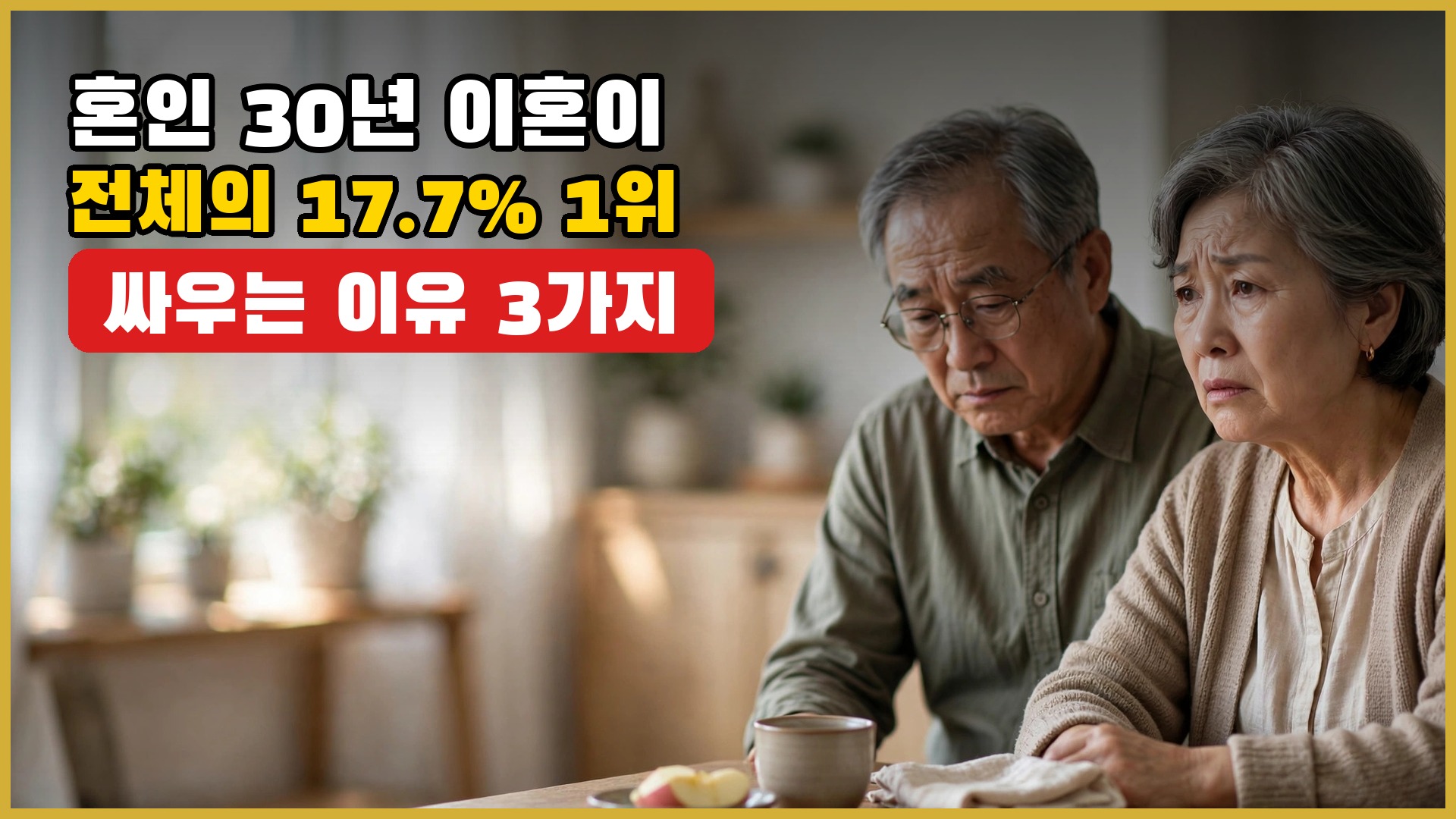
- 은퇴 후 부부가 싸우는 진짜 이유|30년 결혼의 비밀 3가지
- 혼인 30년 이혼이 1위|아이 키우고 나면 부부가 무너지는 이유
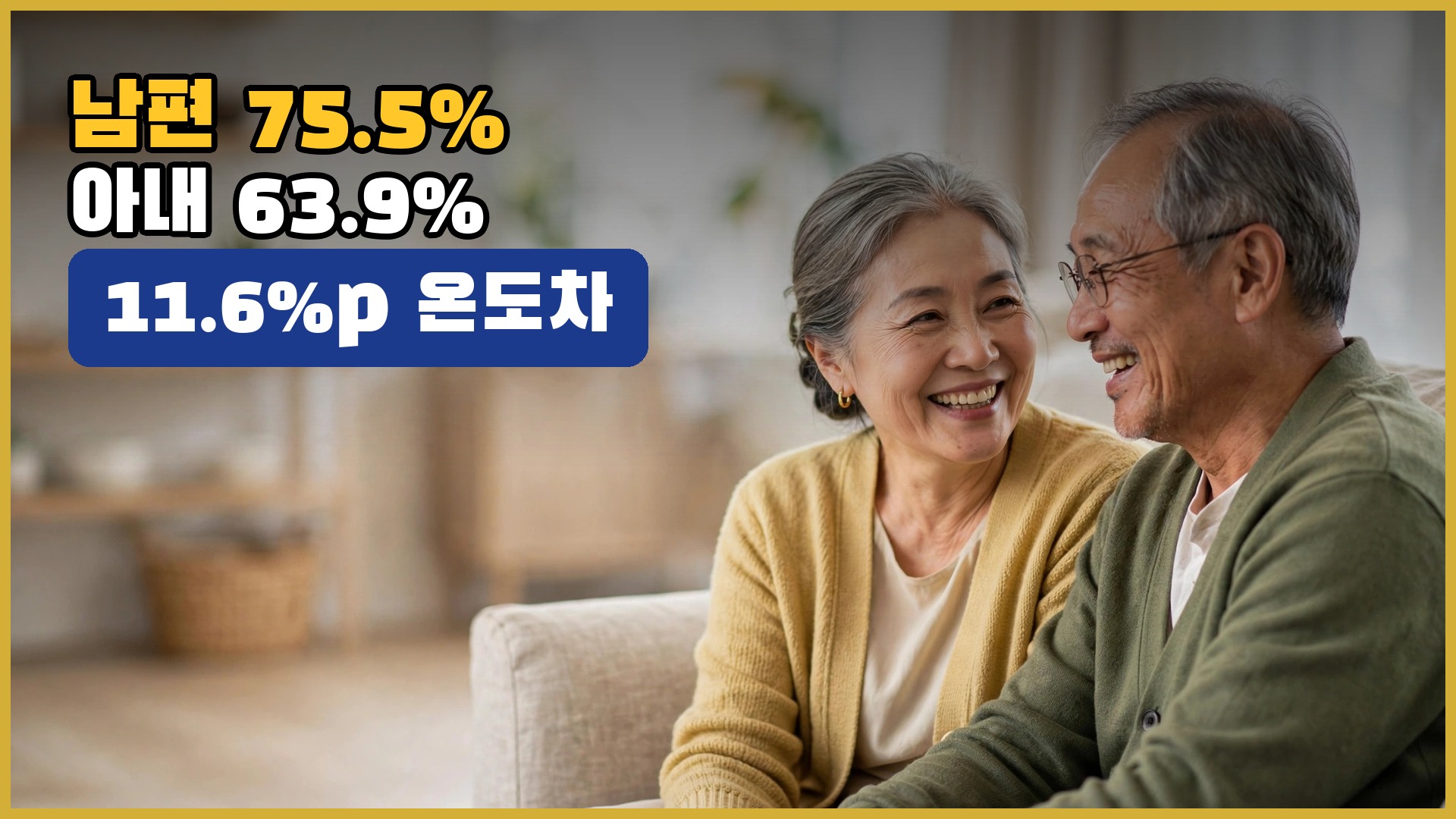
- 남편 75.5% 만족, 아내 63.9%|같은 결혼 다른 온도
🎙️ 대본 (약 19분 · Vrew 양식)
📋 Vrew '텍스트로 영상 만들기'에 그대로 붙여넣으세요. 한 줄 = 한 문장 = 한 클립·한 자막 양식입니다.
혼인 30년 넘은 부부의 이혼이 전체 이혼의 17.7퍼센트로 1위입니다.
신혼부부보다 더 많이 헤어진다는 국가데이터처 2025년 통계입니다.
올해 2분기에는 동거 20년 넘은 부부의 이혼 비중이
41.4퍼센트로 역대 최고를 기록했습니다.
1년 새 17퍼센트나 늘었습니다.
60세 이상 이혼은 1만3743건으로,
1990년 통계 작성 이후 가장 많습니다.
전체 이혼은 6년째 줄고 있는데 60세 이상 이혼만 늘고 있습니다.
1997년에는 혼인 20년 이상 이혼이
전체의 9.8퍼센트에 불과했습니다.
2024년에는 36.2퍼센트로 3.7배 늘었습니다.
아이 방이 비었습니다.
옷장은 반쯤 비었고 책상 위에는 두고 간 책 몇 권만 남았습니다.
저녁 식탁에 두 사람만 앉았습니다.
예전에는 시끌벅적했는데 이제는 젓가락 소리만 들립니다.
문득 이런 생각이 듭니다.
우리 부부, 원래 이렇게 조용했나.
아이들 다 키우고 나면 부부는 처음으로 두 사람만 남습니다.
그때부터 싸움이 시작되는데, 왜 그럴까요.
오늘 이 영상에서 은퇴 후 부부가
싸우는 진짜 이유 세 가지를 알려드립니다.
황혼을 빛나게 하는 지혜 다섯 가지도 함께 나누겠습니다.
이 영상은 부부싸움을 부추기는 영상이
아니라 부부를 다시 잇는 영상입니다.
끝까지 보시면 우리 부부가 왜 싸우는지 정확히 알게 되실 겁니다.
그리고 어떻게 풀어야 할지도 알게 되실 겁니다.
본격적인 이야기에 앞서 꼭 드릴 말씀이 있습니다.
이 영상은 일반적인 정보 제공을 목적으로 하며,
전문적인 심리 상담을 대신할 수 없습니다.
부부 갈등이 깊어 마음이 많이 힘드시다면
가까운 가족상담 전문기관이나
정신건강복지센터에 상담을 요청하시기 바랍니다.
대표번호는 1577-0199번이니,
당신의 마음이 먼저입니다.
안녕하십니까, 시니어의 건강과 행복을 응원하는 만수무강돌쇠입니다.
오늘은 은퇴 후 부부 이야기로,
은퇴 후 부부싸움이 느는 데는 분명한 구조가 있습니다.
결혼 생활 30년 동안 부부를 묶어주던 가장
강한 끈은 사실 사랑이 아니었습니다.
자녀라는 공동 프로젝트였습니다.
아이 학교 보내고, 취업시키고, 결혼시키고, 손주까지,
30년 동안 부부는 이 프로젝트 하나로 버텼습니다.
부부라는 이름으로 살았지만 사실은 부모라는 이름으로 살았습니다.
그런데 아이가 독립하면 프로젝트가 끝납니다.
그때 부부는 처음으로 서로만 마주하게 됩니다.
할 말이 없는 건, 30년 동안
아이 이야기로 대화를 대신해 왔기 때문입니다.
한국고용정보원 조사에 따르면
은퇴 후 배우자와의 관계 점수는
74.3점에서 65.8점으로 떨어졌습니다.
은퇴 전에는 회사와 사회가 남편의 하루를 채워줬습니다.
은퇴 후에는 집이 전부라, 아내는 30년 살림 패턴이
깨지고 남편은 30년 직장 패턴이 사라집니다.
두 사람의 하루가 처음으로 완전히 겹치기 시작합니다.
서로 다른 리듬으로 살던 두 사람이 같은 공간에 갇히는 겁니다.
아침에 눈을 뜨면 옆에 있는 사람이 보이고,
점심에도, 저녁에도 보입니다.
반갑기보다 낯설고,
30년을 함께 살았는데 이렇게 낯설 수가 있을까요.
이게 갈등의 시작인데, 남편의 은퇴와
아내의 은퇴는 전혀 다른 풍경입니다.
남편은 직장을 잃습니다.
30년 다닌 회사가 사라지고 만나던 사람들이 멀어지니 상실감이 큽니다.
아내는 일거리가 늘어나, 하루 세 끼를
꼬박 챙겨야 하고 집에 있는 남편까지
신경 써야 합니다.
부담감이 큰데,
한 사람은 잃었고 한 사람은 늘어났습니다.
서로 다른 아픔을 안고 같은 집에 살게 되는 겁니다.
이걸 모르면 서로의 마음을 읽을 수 없습니다.
첫 번째 이유는 대화 주제의 소멸입니다.
자녀가 독립하기 전에는 밥상머리 화제가 넘쳤습니다.
아이 성적 걱정, 학원비, 취업 준비, 결혼 이야기에
손주 자랑까지, 말할 거리가 끝이 없었습니다.
누가 반찬을 더 먹었는지로도 웃고 떠들었고,
아이 숙제 이야기로 밤이 깊어졌습니다.
그 시절에는 그 시끄러움이 행복이었다는 걸 몰랐습니다.
그런데 아이가 독립하면 밥상이 조용해집니다.
남편이 말을 걸어도 아내는 건성으로 대답하고,
아내가 말을 걸어도 남편은 텔레비전만 봅니다.
30년을 함께 살았는데
서로에 대해 아는 게 없다는 걸 그때 처음 깨닫습니다.
상대방이 요즘 뭘 좋아하는지, 무슨 생각을 하는지,
어떤 꿈이 있는지, 물어본 적이 언제인지 기억나지 않습니다.
젊을 때는 서로에게 궁금한 게 많았습니다.
좋아하는 음식, 보고 싶은 영화, 가고 싶은 곳.
나이 들어서는 궁금한 게 사라지니, 궁금하지 않으면
묻지 않고, 묻지 않으면 대화가 끊깁니다.
대화가 없으면 오해가 쌓이고,
오해가 쌓이면 싸움이 됩니다.
대화 주제가 사라진 부부는 같은 집에 사는 남남이 됩니다.
대화를 되살리는 첫 질문은 거창하지 않아도 됩니다.
오늘 뭐 했어.
몸은 좀 어때.
오늘 뭐 먹을까.
이 한마디면 질문이 대화를 열고,
대화가 마음을 엽니다.
사라진 주제 대신 새 주제를 만드십시오.
함께 본 드라마 이야기, 건강 이야기, 여행 계획.
옛날 이야기도 좋은데,
30년 전 연애 시절 이야기는 두 사람을 웃게 합니다.
새 주제는 억지로 만들 게 아니라,
함께 경험하면 생기는 겁니다.
같이 걷고, 같이 보고, 같이 먹으면 할 말이 늘어납니다.
두 번째 이유는 남편과 아내가 느끼는 결혼이 다르다는 겁니다.
2025년 고령자통계에 따르면
배우자와의 관계에 만족한다는 분은
남편 75.5퍼센트, 아내 63.9퍼센트입니다.
11.6퍼센트포인트 차이로, 같은 집에서
수십 년을 살았는데 경험한 결혼이 다른 겁니다.
중장년층 조사에서도 남성 80.1퍼센트,
여성 69.0퍼센트로 11.1퍼센트포인트 차이였습니다.
재미있는 건 자녀 관계 만족도는 남녀가 거의 차이가 없다는 겁니다.
유독 배우자 관계에서만 남녀 차이가 크게 나타납니다.
같은 결혼인데 남편의 결혼과 아내의 결혼은 다른 결혼이었습니다.
왜 그럴까요.
가사분담을 보시면 답이 나오는데,
가사는 공평하게 나눠야 한다는 분이
64.4퍼센트입니다.
10년 전 37.9퍼센트에서 26.5퍼센트포인트나
늘었으니, 생각은 크게 바뀌었습니다.
그런데 실제로 공평하게 나눈다는 분은 22.1퍼센트에 그칩니다.
생각과 현실의 차이가 42.3퍼센트포인트나 됩니다.
아내는 남편이 도와주길 바라고,
남편은 자기가 도와준다고 생각합니다.
여기서 말의 차이가 문제인데,
도와준다는 말에는 주인이 따로
있다는 뜻이 담겨 있습니다.
살림의 주인은 아내이고 남편은 거드는 사람이라는 겁니다.
아내가 원하는 건 도움이 아니라 함께 책임지는 겁니다.
아내의 하루를 보십시오.
아침밥 차리고, 청소하고, 빨래하고, 점심 차리고,
장보고, 저녁 차리고, 쉴 틈이 없습니다.
남편의 하루를 보십시오.
텔레비전 보고, 산책하고, 낮잠 자고, 스마트폰 봅니다.
여유가 넘쳐 같은 집인데도 하루가 다릅니다.
이 차이를 모르면 서로가 서로를
이해할 수 없고, 이 온도차가 싸움이 됩니다.
65세 이상 부부의 가사분담 만족도는
37.2퍼센트, 불만족은 13.0퍼센트.
5년 전보다 좋아지긴 했지만 아직 갈 길이 멉니다.
작은 것부터 함께 하십시오.
설거지를 같이 서서 하고, 청소기를 함께 미시고,
장 볼 목록을 함께 적으십시오.
거창한 이벤트가 아니라 일상의 작은 함께가 부부를 바꿉니다.
세 번째 이유는 함께 있는 시간은 늘었는데
대화의 질은 떨어졌다는 겁니다.
은퇴 전 남편의 하루는 회사에서 채워졌습니다.
아내의 하루는 집에서 채워졌고,
서로 다른 세계에서 살다가 저녁에 만났습니다.
만나는 시간이 짧으니까 서로에게 잘해 주려고 했습니다.
은퇴 후에는 두 사람의 세계가 하나로 합쳐져,
같은 공간에 하루 종일 있습니다.
그런데 각자 스마트폰만 보며, 같은 소파에
앉아 있어도 서로 다른 화면을 봅니다.
남편은 뉴스 보고 아내는 드라마 봅니다.
같은 소파, 다른 세상이라 손만 뻗으면
닿을 거리에 마음은 닿지 않습니다.
물리적으로는 가까워졌는데 심리적으로는 멀어집니다.
사소한 충돌도 늘어납니다.
아침에 볼 텔레비전 채널, 점심 메뉴, 낮잠 시간,
리모컨 하나를 두고도 신경전이 벌어집니다.
남편은 아내가 잔소리한다고 느끼고,
아내는 남편이 무관심하다고 느낍니다.
서로 서운한 마음만 쌓이는데,
잔소리는 사랑의 다른 이름이라고 합니다.
하지만 듣는 사람은 사랑으로 들리지 않습니다.
잔소리가 늘면 대화는 줄어듭니다.
은퇴 전에는 떨어져 있어서 그리웠던 사이가
은퇴 후에는 붙어 있어서 지치는 사이가 됩니다.
하지만 붙어 있다는 건 기회이기도 한데,
떨어져 있을 때는 보고 싶어도 볼 수 없었습니다.
지금은 마음만 먹으면 언제든 대화할 수 있습니다.
문제는 시간이 아니라 마음의 문입니다.
예를 들어 이런 경우를 생각해 보십시오.
평생 바쁘게 살던 부부가 있습니다.
아내가 은퇴한 남편에게 장보러 같이 가자고 합니다.
남편은 귀찮다고 하는데,
텔레비전 보던 자리에서 일어나기 싫다는 겁니다.
아내는 그날 하루 종일 청소, 빨래, 저녁 준비까지 집안일을 했습니다.
남편은 소파에서 하루 종일 텔레비전을 봤습니다.
장보러 가자는 말은 같이 시간을 보내자는 뜻이었지만,
남편이 들은 건 심부름이었습니다.
같은 말도 듣는 귀에 따라 다릅니다.
아내는 30년을 함께 살았는데
장보는 것 하나 같이 안 해준다는 게 서운합니다.
남편 입장에서는 평생 밖에서 일하느라 고생했는데
은퇴 후에도 눈치가 보인다는 겁니다.
누가 옳고 그른 게 아니라,
두 사람이 서로 다른 언어로
사랑을 표현해 왔기 때문입니다.
아내는 함께하는 시간으로 사랑을 확인하고,
남편은 경제적 뒷받침으로 사랑을 증명해 왔습니다.
은퇴 후에는 그 방식이 더 이상 통하지 않습니다.
월급 봉투가 사라진 자리에 무엇을 놓아야 할지 두 사람 다 모릅니다.
그래서 부부는 새로운 언어를 배워야 합니다.
시간을 함께 쓰는 법, 마음을 말로 전하는 법.
늦지 않았으니 지금 시작하면 되고,
사랑의 방식은 바뀔 수 있습니다.
우리 부부는 괜찮은 걸까, 스스로 점검해 보십시오.
첫째, 하루 대화 시간이 10분도 안 됩니다.
둘째, 밥을 먹을 때 텔레비전만 봅니다.
셋째, 상대방의 하루 일과를 모릅니다.
넷째, 고마움이나 미안하다는 말을 한 달 넘게 안 했습니다.
다섯째, 싸우더라도 무슨 일로 싸웠는지 기억나지 않습니다.
여섯째, 배우자보다 친구나 자식과 있는 게 편합니다.
일곱째, 앞으로 10년을 이 사람과 어떻게 살지 상상이 안 됩니다.
세 개 이상 해당되시면 지금이 바로 돌아볼 때입니다.
점검은 비난이 아니라 돌아보기이고,
돌아보는 부부는 무너지지 않습니다.
신호를 무시하면 황혼이혼 통계의 숫자가 됩니다.
2025년, 부부 모두 60세 이상인 이혼은
1만3743건으로 역대 최다였습니다.
전체 이혼은 6년째 줄고 있는데 60세 이상 이혼만 늘고 있습니다.
60세 이상 이혼 비중은 15.6퍼센트로 역대 최고입니다.
이 숫자는 경고등이지만,
경고등은 고치라는 신호이지
끝이라는 신호가 아닙니다.
지금 돌아보면 됩니다.
하지만 희망도 있어, 배우자와의 관계에
만족한다는 분이 70.3퍼센트입니다.
10명 중 7명은 만족하며 살고,
2년 전보다 5.3퍼센트포인트 올랐습니다.
가사분담 만족도도 5년 전보다 6.7퍼센트포인트 올랐습니다.
좋아지는 부부가 늘고 있는데,
좋아지는 부부들에게는 공통점이 있습니다.
서로에게 말을 걸고 고마움을 표현하고 함께 시간을 씁니다.
거창한 게 아니라 작은 것들의 반복입니다.
남자는 일, 여자는 가정이라는 말에
반대하는 65세 이상이 57.1퍼센트입니다.
생각이 바뀌고, 행동도 바뀌고 있습니다.
은퇴 후 부부관계는 위기가 아니라 기회일 수 있습니다.
30년 만에 처음으로 두 사람만의 시간을 갖게 된 겁니다.
이 시간을 어떻게 쓰느냐가 남은 30년을 결정합니다.
은퇴 후 30년은 결혼 생활의 절반으로,
전반전이 끝났을 뿐입니다.
후반전은 지금부터입니다.
전반전의 점수는 잊으십시오.
후반전은 새 게임이고,
어떻게 살지는 두 사람에게 달려 있습니다.
늦었다고 생각하지 마십시오.
지금이 가장 빠릅니다.
이제 실천법 다섯 가지를 알려드립니다.
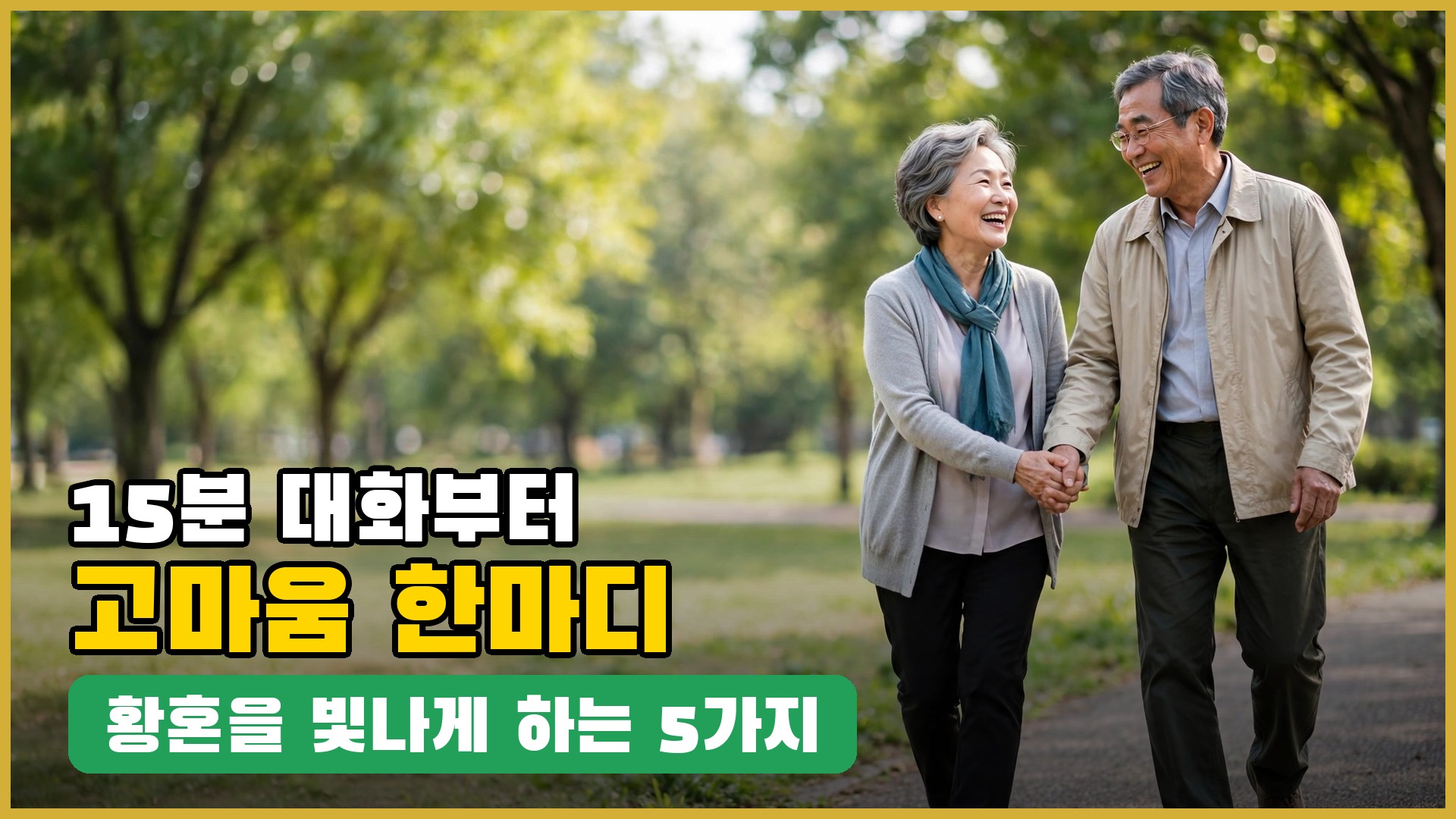
첫째, 하루 15분 대화 시간을 정하십시오.
밥 먹고 나서 15분, 텔레비전을 끄고 마주 앉으십시오.
주제는 사소해도 됩니다.
오늘 날씨, 본 드라마, 몸 상태, 어디가 아픈지, 뭘 먹고 싶은지.
중요한 건 마주 보고 말하는 겁니다.
15분이 쌓이면 한 달에 7시간, 1년에 90시간이 됩니다.
처음에는 어색할 겁니다.
그래도 앉는 게 시작이니, 일단 앉으십시오.
처음에는 무슨 말을 해야 할지 막막할 겁니다.
그럴 때는 오늘 있었던 일 중 가장 기억에 남는 일을 말하십시오.
둘째, 나 전달법으로 말하십시오.
당신은 왜 맨날 그래가 아니라 나는 서운했어로 시작하십시오.
당신이 도와주지 않아서가 아니라 나는 혼자 장보기가 힘들었어.
이렇게 말하면 상대방이 방어적으로 듣지 않습니다.
너 전달법은 공격이 되고 나 전달법은 호소가 됩니다.
말 한마디 바꾸는 것만으로도 집안 공기가 달라집니다.
상대방을 바꾸려 하지 말고, 내 말투부터 바꾸십시오.
셋째, 고마움을 말로 하십시오.
30년을 함께 살면 고마움이 당연해지고,
당연해진 고마움은 사라집니다.
밥 해줘서 고마워, 빨래해 줘서 고마워, 이 한마디가 싸움을 막습니다.
고마움을 말하는 부부는 서운함을 말하는 부부보다 오래 갑니다.
오늘 저녁부터 시작하십시오.
밥 한 그릇에 고마움 한마디.
넷째, 각자의 시간을 보장하십시오.
하루 종일 붙어 있으면 숨이 막힙니다.
남편은 산책, 아내는 친구 만남처럼, 각자 좋아하는 일을 하십시오.
따로 있는 시간이 있어야 함께 있는 시간이 소중해집니다.
적당한 거리가 좋은 관계를 만듭니다.
붙어 있는 게 사랑이 아니라,
숨 쉴 틈을 주는 게 사랑입니다.
다섯째, 가사를 함께 하십시오.
설거지 하나를 같이 하는 것만으로도 대화가 생깁니다.
장보기도 둘이 가고, 청소도 함께 하십시오.
가사분담에 만족하는 부부가
배우자 만족도도 높다는 게 통계의 가르침입니다.
함께 땀 흘리면 마음도 함께 움직이고,
같이 하면 할 말이 생깁니다.
할 말이 생기면 마음이 열립니다.
말 한마디가 싸움을 만들고,
말 한마디가 싸움을 막습니다.
싸움을 부르는 말이 있습니다.
당신은 맨날 그래.
내가 다 했지.
알아서 해.
이 세 마디는 상대방의 마음을 닫습니다.
싸움을 피하는 말도 있습니다.
나는 서운했어.
같이 하자.
같이 정하자.
이 세 마디는 상대방의 마음을 엽니다.
같은 뜻도 말하는 법에 따라 다르니,
오늘부터 말투를 바꾸십시오.
이제 1주일 계획을 세워 보십시오.
계획은 거창할 필요 없이, 작게 시작해야 오래 갑니다.
월요일, 오늘 배운 나 전달법으로 서운했던 점을 한 번 말해 보십시오.
화요일은 15분 대화 시간을 정하는데,
텔레비전 끄는 것부터 시작입니다.
수요일, 고마운 점 하나를 말로 하십시오.
쑥스러워도 꼭 말로 하시고,
목요일에는 각자 좋아하는 일을 하십시오.
따로 노는 날이고, 금요일에는 장보기를 함께 가십시오.
둘이 가는 장보기가 데이트입니다.
토요일, 30년 전 처음 만난 이야기를 하며
젊었던 두 사람을 떠올려 보십시오.
일요일, 다음 주 약속을 함께 정하십시오.
작은 실천이 쌓이면 부부의 온도가 바뀝니다.
은퇴 후 부부에게 필요한 건 함께할 거리입니다.
거창하지 않아도 되니, 아침 산책을 함께 하십시오.
같은 길을 걸으면 자연스럽게 말이 나옵니다.
텃밭을 함께 가꾸십시오.
무언가를 함께 키우면 대화가 자랍니다.
봉사를 함께 하십시오.
남을 돕는 일은 부부를 단단하게 합니다.
여행을 함께 계획해,
목적지가 있으면 설렘이 돌아옵니다.
함께할 거리가 생기면 싸울 거리가 줄어듭니다.
자주 묻는 질문에 답해 드립니다.
질문, 60년을 살았는데 이제 와서 바뀌겠습니까.
답, 바뀝니다.
가사분담 만족도가 5년 만에 6.7퍼센트포인트 오른 게 증거입니다.
생각이 바뀌면 행동이 바뀌니,
당신도 바뀔 수 있습니다.
질문, 대화가 안 통하는데 어떡합니까.
답, 처음부터 깊은 대화는 어려우니 사소한 이야기부터 시작하십시오.
날씨 이야기, 드라마 이야기로 문을 여십시오.
대화는 기술이 아니라 습관입니다.
질문, 상대방이 변하지 않으면 어떡합니까.
답, 내가 먼저 바꾸면 상대방도 바뀝니다.
15분 대화, 고마움 한마디부터 시작해 보십시오.
질문, 이혼을 고민 중인데 어떡합니까.
답, 혼자 결정하지 마십시오.
감정이 격할 때의 결정은 후회가 되니,
가족상담 전문기관의 도움을 받으십시오.
정신건강복지센터 1577-0199번입니다.
질문, 먼저 손 내밀기가 자존심 상합니다.
답, 자존심보다 관계가 먼저입니다.
먼저 손 내미는 사람이 진짜 어른입니다.
질문, 부부 상담이 효과가 있습니까.
답, 있습니다.
전문가의 도움을 받는 건 부끄러운 일이 아닙니다.
오늘 당장 하실 세 가지입니다.
첫째, 오늘 저녁 밥상에서 텔레비전을 끄고,
마주 보고 밥을 먹으십시오.
둘째, 배우자에게 고마운 점 하나를 말로 하십시오.
쑥스러우면 쪽지로라도 하십시오.
셋째, 내일 함께 할 일 하나를 정하십시오.
장보기, 산책, 뭐든 좋습니다.
세 가지면 충분합니다.
오늘 영상은 여기까지입니다.
은퇴 후 부부싸움의 진짜 이유는 사랑이 식어서가 아닙니다.
대화의 주제가 사라지고 서로 다른 언어로
사랑을 말하고 가깝고도 멀어졌기 때문입니다.
이 영상은 일반적인 정보 제공을 목적으로 하며
전문적인 심리 상담을 대신하지 않습니다.
마음이 많이 힘드시다면 가족상담 전문기관이나
정신건강복지센터 1577-0199번에
상담을 요청하시기 바랍니다.
구독과 좋아요로 만수무강돌쇠를 응원해 주십시오.
부부는 원래 남이었던 두 사람이 30년을 함께 살았습니다.
그게 기적이니, 남은 시간도 그 기적을 이어가십시오.
이 영상이 두 분의 저녁 식탁에 작은 변화를 가져오길 바랍니다.
다음 영상에서 뵙겠습니다.
🖼️ 이미지 프롬프트 (대본 순서대로)
📋 Vrew 나레이션 재생 중 띄울 배경 이미지용. 다른 AI 이미지 생성기에 그대로 입력하세요. (16:9 · 실사 · 한국인 어르신 · 글자 없음)
## 1. 거실의 침묵 (나레이션: "혼인 30년 넘은 부부의 이혼이 전체 이혼의 17.7퍼센트로 1위입니다.")
photorealistic cinematic photograph, 16:9, no text. A korean elderly couple in their late sixties sit at opposite ends of a long living room sofa in a modest Korean apartment, backs half-turned away from each other, faces solemn and distant. Cold gray daylight filters through a sheer-curtained window, casting soft shadows across a low wooden table with two untouched teacups. The husband stares at the floor with folded arms while the wife gazes out the window, a palpable heavy silence between them. Muted desaturated color grade, shallow depth of field, documentary realism, natural skin texture, everyday Korean home interior with a wall clock and framed family photo blurred in the background.

## 2. 멀어지는 두 사람 (나레이션: "올해 2분기에는 동거 20년 넘은 부부의 이혼 비중이41.4퍼센트로 역대 최고를 기록했습니다.")
photorealistic cinematic photograph, 16:9, no text. A korean elderly couple walk along a wide riverside park path in autumn, but a striking empty gap of several meters separates them, each walking alone in their own thoughts. Fallen yellow leaves scatter across the pavement, bare trees line the walkway, and the Han river glimmers gray in the background. The husband walks ahead with hands in his coat pockets, the wife trails behind looking down, their long shadows stretching apart on the ground. Overcast melancholic light, wide establishing shot, documentary style realism, natural wrinkles and weathered faces, quiet emotional distance conveyed through composition.

## 3. 빈 벤치의 노인 (나레이션: "60세 이상 이혼은 1만3743건으로,1990년 통계 작성 이후 가장 많습니다.")
photorealistic cinematic photograph, 16:9, no text. A korean elderly man in his seventies sits alone on a weathered wooden park bench at dusk, shoulders slumped, gazing blankly at an empty playground across the path. Warm streetlamps flicker on one by one while the sky fades to deep blue, fallen leaves drifting in the cold wind. His worn padded winter jacket and tired hands resting on his knees tell a story of solitude. Beside him the bench stretches conspicuously empty. Shallow depth of field, cinematic color grade with cool blue shadows and warm lamp highlights, hyperreal skin detail, quiet documentary mood of late-life loneliness in a Korean neighborhood park.

## 4. 빛바랜 가족사진 (나레이션: "1997년에는 혼인 20년 이상 이혼이전체의 9.8퍼센트에 불과했습니다.")
photorealistic cinematic photograph, 16:9, no text. A korean elderly couple in their sixties sit side by side on the floor of a traditional Korean living room, flipping through a thick old family photo album spread open on a low table. Faded color photographs of children growing up, school entrance ceremonies and wedding days fill the pages. The wife holds a yellowed photo with trembling fingers while the husband leans in, both wearing soft nostalgic expressions tinged with sadness. Warm tungsten lamplight glows over the scene, dust particles floating in the air, shallow depth of field on their weathered hands and faces, intimate documentary realism, cozy Korean home interior with paper-screen doors behind them.

## 5. 비어 있는 아이 방 (나레이션: "아이 방이 비었습니다.")
photorealistic cinematic photograph, 16:9, no text. A korean elderly woman in her sixties stands quietly in the doorway of a small emptied bedroom, one hand resting on the doorframe, gazing at a neatly made single bed with a folded blanket and a few remaining books on the desk. Afternoon sunlight streams through the window, illuminating dust motes and the bare walls where posters once hung, faint rectangular marks left behind. A small potted plant wilts slightly on the windowsill. Her expression is tender and wistful, lips pressed together. Soft natural window light, shallow depth of field, muted warm tones, hyperreal detail of the modest Korean home interior, poignant stillness of an empty nest.

## 6. 젓가락 소리만 (나레이션: "예전에는 시끌벅적했는데 이제는 젓가락 소리만 들립니다.")
photorealistic cinematic photograph, 16:9, no text. A korean elderly couple eat dinner in silence at a small round dining table in a dimly lit Korean apartment kitchen, a single warm pendant lamp glowing above bowls of rice, steaming soup and modest side dishes. The husband lifts his chopsticks mid-air while the wife stares down at her bowl, neither making eye contact, steam curling upward between them like a wall. The table that once felt crowded now feels cavernously empty around just two people. Low-key cinematic lighting, shallow depth of field on the chopsticks and weathered hands, rich amber highlights against deep shadows, hyperreal food and skin texture, heavy quiet atmosphere of a wordless meal.

## 7. 두 사람만 남은 식탁 (나레이션: "아이들 다 키우고 나면 부부는 처음으로 두 사람만 남습니다.")
photorealistic cinematic photograph, 16:9, no text. A korean elderly couple sit across from each other at a large rectangular dining table built for a family of five, now set with only two modest place settings at the far ends, the vast empty wooden surface between them emphasizing their new solitude. Morning light pours through lace curtains onto the polished table, highlighting two bowls of rice and a small shared dish of kimchi. Both look slightly lost, unsure where to rest their eyes, the husband adjusting his spoon, the wife folding a napkin. Wide symmetrical composition, soft natural daylight, documentary realism, subtle melancholy in their postures, ordinary Korean home dining room with a wall calendar blurred behind.

## 8. 거실의 말다툼 (나레이션: "오늘 이 영상에서 은퇴 후 부부가싸우는 진짜 이유 세 가지를 알려드립니다.")
photorealistic cinematic photograph, 16:9, no text. A korean elderly couple stand facing each other in tense confrontation in the middle of a modest Korean living room, the husband gesturing sharply with one raised hand while the wife turns her face away with arms crossed, hurt visible in her tightened jaw. A toppled cushion lies on the floor between them, the television glows unwatched in the background, and evening light through the blinds stripes the scene with dramatic shadows. Their expressions show decades of suppressed frustration erupting at once. Cinematic low-key lighting, shallow depth of field, hyperreal facial detail capturing anger and sorrow, authentic Korean apartment interior with a low sofa and family photos on the wall.

## 9. 공원 벤치의 화해 (나레이션: "이 영상은 부부싸움을 부추기는 영상이아니라 부부를 다시 잇는 영상입니다.")
photorealistic cinematic photograph, 16:9, no text. A korean elderly couple sit close together on a sunlit park bench in spring, their weathered hands gently clasped between them, soft smiles replacing earlier tension as cherry blossom petals drift through golden afternoon light. The husband leans slightly toward his wife, who rests her head near his shoulder, both gazing at children playing on the grass beyond. Warm backlight creates a gentle halo around them, shallow depth of field with creamy bokeh of blossoms, uplifting hopeful color grade, hyperreal skin texture showing every kind wrinkle, tender documentary moment of reconnection and forgiveness in a Korean neighborhood park.

## 10. 마주 앉은 대화 (나레이션: "끝까지 보시면 우리 부부가 왜 싸우는지 정확히 알게 되실 겁니다.")
photorealistic cinematic photograph, 16:9, no text. A korean elderly couple sit face to face at a small wooden kitchen table in the warm glow of evening, leaning in toward each other in earnest conversation, the wife speaking with an open expressive gesture while the husband listens intently with his chin resting on folded hands. Two cups of barley tea steam gently between them, the television switched off and dark in the background, a small notebook lying open beside the cups. Soft tungsten lamplight wraps their faces in warmth, shallow depth of field, intimate documentary framing, hyperreal detail of attentive eyes and softened expressions, the quiet breakthrough of a couple finally talking honestly.

## 11. 차분한 거실의 저녁 (나레이션: "이 영상은 일반적인 정보 제공을 목적으로 하며,전문적인 심리 상담을 대신할 수 없습니다.")
photorealistic cinematic photograph, 16:9, no text. A korean elderly couple relax calmly together in a cozy Korean living room at night, seated side by side on a low fabric sofa with a soft blanket over their laps, watching nothing in particular as warm floor-lamp light pools around them. A small side table holds two mugs of tea and an open notebook with a pen, suggesting thoughtful reflection rather than conflict. The husband rests his arm along the sofa back near his wife's shoulder, both wearing peaceful neutral expressions. Warm amber interior lighting, shallow depth of field, hyperreal fabric and skin texture, serene documentary atmosphere of a stable home where difficult topics can be discussed safely.

## 12. 전화 상담을 하는 아내 (나레이션: "부부 갈등이 깊어 마음이 많이 힘드시다면가까운 가족상담 전문기관이나정신건강복지센터에 상담을 요청하시기 바랍니다.")
photorealistic cinematic photograph, 16:9, no text. A korean elderly woman in her sixties sits by a bright living room window holding a cordless phone to her ear, her expression a mixture of worry and relief as she finally reaches out for help, one hand clutching a tissue. Soft daylight illuminates half her face while the other half rests in gentle shadow, a box of tissues and a glass of water on the small table beside her. Behind her the tidy apartment is quiet and still. Shallow depth of field focused on her emotional eyes, cinematic natural lighting, hyperreal skin detail, sensitive documentary portrayal of a senior bravely seeking counseling support, dignified and hopeful mood.

## 13. 당신 마음이 먼저입니다 (나레이션: "당신의 마음이 먼저입니다.")
photorealistic cinematic photograph, 16:9, no text. An intimate close-up portrait of a korean elderly woman in her late sixties cradling a warm ceramic teacup with both hands beside a sunlit window, eyes gently closed and lips curved in a faint peaceful smile, as if granting herself a long-overdue moment of rest. Soft morning light caresses the fine lines of her kind face, a few strands of gray hair glowing at her temple. The background melts into warm creamy bokeh of a quiet kitchen. Macro-level hyperreal skin texture, shallow depth of field, tender golden color grade, deeply humane documentary stillness celebrating self-compassion and inner calm in later life.

## 14. 구조를 보여주는 식탁 (나레이션: "은퇴 후 부부싸움이 느는 데는 분명한 구조가 있습니다.")
photorealistic cinematic photograph, 16:9, no text. A korean elderly couple sit at opposite sides of a long narrow kitchen table photographed in striking symmetrical composition, the empty tabletop stretching between them like a visible diagram of their relationship structure, two rice bowls marking each end. Overhead soft daylight from a skylight divides the frame into two equal halves, the husband on the left looking down, the wife on the right gazing aside, mirrored postures revealing an invisible pattern. Minimalist geometric framing, cool neutral color grade, documentary conceptual realism, hyperreal detail of wood grain and porcelain, the architecture of marital distance made visible.

## 15. 자녀라는 공동 프로젝트 (나레이션: "자녀라는 공동 프로젝트였습니다.")
photorealistic cinematic photograph, 16:9, no text. On the wall of a modest Korean home hangs a chronological row of framed family photographs tracing thirty years, from a newborn baby to school entrance days in uniform to a wedding portrait, forming a visual timeline of the shared project that held a marriage together. In the soft foreground, the blurred shoulders of a korean elderly couple are visible as they stand before the wall, the wife reaching up to straighten one frame with tender fingers. Warm hallway lighting glows across the glass, gentle reflections and dust in the air, shallow depth of field, nostalgic documentary realism, the weight of decades of parenting captured in a single wall.

## 16. 버텨온 30년 (나레이션: "30년 동안 부부는 이 프로젝트 하나로 버텼습니다.")
photorealistic cinematic photograph, 16:9, no text. Weathered elderly korean hands hold a slightly faded wedding-day photograph of a young couple, the old print's colors softened by time, thumbs gently pressing its edges as if holding onto the years themselves. Behind the photograph, softly blurred, a korean elderly couple in their sixties sit together on a sofa, the wife leaning her head against her husband's shoulder with eyes full of memory. Warm lamplight bathes the scene in amber, shallow depth of field shifting focus between the young faces in the photo and the aged hands holding it, hyperreal paper texture and skin detail, profoundly moving documentary image of endurance through thirty years of marriage.

## 17. 처음 마주한 두 사람 (나레이션: "그때 부부는 처음으로 서로만 마주하게 됩니다.")
photorealistic cinematic photograph, 16:9, no text. A korean elderly couple sit across from each other at a small dining table in a quiet apartment, caught in a moment of awkward first eye contact after the children have left, like strangers meeting again after thirty years, both offering hesitant uncertain smiles. Morning light slants through venetian blinds striping the table with light and shadow, two simple breakfast bowls between them. The husband fidgets with his spoon, the wife tucks hair behind her ear, nervous and tender at once. Shallow depth of field, soft natural lighting, hyperreal facial micro-expressions, delicate documentary realism of rediscovery at the start of an empty nest.

## 18. 빈 의자를 보는 부부 (나레이션: "30년 동안아이 이야기로 대화를 대신해 왔기 때문입니다.")
photorealistic cinematic photograph, 16:9, no text. A korean elderly couple sit at a dinner table set for four, both gazing quietly at the two conspicuously empty chairs where their children used to sit, place settings removed but the chairs still pulled out as if waiting. Warm steam rises from the shared dishes in the center, untouched. The wife's hand rests near the empty chair beside her, the husband stares at the vacant seat across from him, their faces soft with longing. Evening lamplight glows amber over the scene, shallow depth of field on the empty chairs, hyperreal detail, poignant documentary composition about the conversations that children once carried and the silence they left behind.

## 19. 회사를 바라보는 은퇴자 (나레이션: "은퇴 전에는 회사와 사회가 남편의 하루를 채워줬습니다.")
photorealistic cinematic photograph, 16:9, no text. A korean elderly man in a neat but slightly worn suit stands on a Seoul street at morning rush hour, looking up wistfully at the glass office tower where he worked for thirty years, streams of younger office workers flowing past him on both sides as he stands still. His leather briefcase hangs from one hand, his employee badge no longer clipped to his chest. Cool blue morning light reflects off the building's glass facade while warm sunlight catches the edge of his thoughtful face. Wide cinematic composition contrasting motion and stillness, shallow depth of field, hyperreal detail, documentary portrait of identity and loss on the first morning of retirement.

## 20. 사라진 출근길 (나레이션: "남편은 30년 직장 패턴이 사라집니다.")
photorealistic cinematic photograph, 16:9, no text. A korean elderly man in pajamas and slippers sits slumped on the edge of a sofa in a dim quiet living room at what used to be his commuting hour, staring vacantly at a dark switched-off television, a neatly ironed suit hanging untouched on a rack by the door behind him. Morning light seeps weakly through closed curtains, dust floating in the pale beams. His hands hang limp between his knees, face slack with the disorientation of a morning with nowhere to go. Low-key natural lighting, shallow depth of field, muted desaturated tones, hyperreal detail of rumpled fabric and tired eyes, documentary stillness of a routine suddenly erased after thirty years.

## 21. 같은 공간에 갇힌 두 사람 (나레이션: "서로 다른 리듬으로 살던 두 사람이 같은 공간에 갇히는 겁니다.")
photorealistic cinematic photograph, 16:9, no text. A korean elderly couple occupy a small cramped Korean apartment living room, each absorbed in a separate rhythm, the husband pacing restlessly near the window while the wife sits folding laundry with tight controlled movements, the narrow space between them charged with friction. A low table, stacked storage boxes and a drying rack crowd the frame, emphasizing how little room remains for two full lives. Harsh midday light through the window casts hard shadows dividing the room. Slightly wide-angle documentary composition, hyperreal detail of cluttered everyday objects, muted tense color grade, the visual pressure of two different tempos colliding in one small home.

## 22. 직장을 잃은 남편 (나레이션: "남편은 직장을 잃습니다.")
photorealistic cinematic photograph, 16:9, no text. A korean elderly man in his late sixties clears out his office desk on his final day, carefully placing a small brass nameplate, a framed team photograph and thirty years of neatly stacked notebooks into a cardboard box, his expression hollow as fluorescent office light buzzes overhead. Behind him younger colleagues work on, already moving past his departure, his emptied chair pushed back at an angle. Cool sterile office lighting, shallow depth of field on his trembling hands gripping the box, hyperreal detail of worn desk edges and the nameplate's engraved surface, quiet documentary dignity of a career ending and an identity being packed away.

## 23. 서로 다른 아픔 (나레이션: "서로 다른 아픔을 안고 같은 집에 살게 되는 겁니다.")
photorealistic cinematic photograph, 16:9, no text. A korean elderly couple stand back to back in a narrow apartment hallway at dusk, the husband staring out a small window with an expression of emptiness and loss, the wife facing the kitchen with weary overloaded eyes, their shoulders nearly touching yet their gazes pointed at entirely different worlds. Warm light from the kitchen spills across her side while cold blue evening light falls on his, literally splitting the frame into two emotional climates. Symmetrical back-to-back composition, cinematic split lighting, shallow depth of field, hyperreal facial detail, powerful documentary image of two different griefs sharing one roof.

## 24. 시끌벅적했던 밥상 (나레이션: "말할 거리가 끝이 없었습니다.")
photorealistic cinematic photograph, 16:9, no text. A warm nostalgic flashback scene of a korean family of four crowded joyfully around a low dining table laden with steaming dishes, teenage children laughing mid-story with chopsticks raised, the younger parents of thirty years ago beaming at each other across the happy chaos. Golden evening light floods the small dining room, steam and laughter almost visible in the air, hands reaching across the table for shared side dishes. Slightly softened warm color grade suggesting memory, shallow depth of field on the laughing faces, hyperreal food detail, exuberant documentary warmth of a household where conversation never ran out.

## 25. 텔레비전만 보는 남편 (나레이션: "아내가 말을 걸어도 남편은 텔레비전만 봅니다.")
photorealistic cinematic photograph, 16:9, no text. In a dim Korean living room at night, a korean elderly man sits transfixed before a glowing television, face bathed in cold blue screen light, while beside him on the same sofa his wife turns toward him mid-sentence, mouth open, hand slightly raised, completely ignored. The television's flicker is the only movement in the room, her expression shifting from hope to resignation. Dramatic chiaroscuro between the cold electronic glow and warm lamplight behind the sofa, shallow depth of field on her disappointed eyes, hyperreal detail, painfully relatable documentary composition of attention withheld and words falling into silence.

## 26. 궁금했던 시절 (나레이션: "젊을 때는 서로에게 궁금한 게 많았습니다.")
photorealistic cinematic photograph, 16:9, no text. A korean elderly couple stroll hand in hand beneath a tunnel of blooming cherry blossoms in a Korean park, both turned toward each other with bright curious smiles, the wife pointing playfully at something ahead while the husband leans in laughing, decades melting away as they rediscover curiosity about each other. Petals swirl through sunbeams around them, soft pink bokeh filling the background. Dreamy warm color grade, shallow depth of field, hyperreal detail of crinkled joyful eyes and intertwined fingers, romantic documentary lightness of a couple remembering what it felt like to wonder about each other.

## 27. 같은 집의 남남 (나레이션: "대화 주제가 사라진 부부는 같은 집에 사는 남남이 됩니다.")
photorealistic cinematic photograph, 16:9, no text. A korean elderly couple eat breakfast at opposite ends of a long kitchen table in cold flat morning light, each staring in a different direction, the husband reading a newspaper held up like a wall, the wife scrolling her phone, a full meter of bare table between their bowls. The modern apartment kitchen gleams impersonally around them, the only sound implied being the ticking wall clock. Wide symmetrical composition emphasizing the gulf, desaturated cool color grade, sharp documentary realism, hyperreal detail of averted eyes and rigid postures, the chilling portrait of two strangers sharing an address.

## 28. 함께 보는 드라마 (나레이션: "함께 본 드라마 이야기, 건강 이야기, 여행 계획.")
photorealistic cinematic photograph, 16:9, no text. A korean elderly couple cuddle close on a cozy sofa in warm lamplight, laughing together at a television drama, the wife clutching her husband's arm as they both react to the same funny scene, a bowl of shared snacks balanced between them. Their faces glow with identical delight, wrinkles deepening with genuine laughter, the room around them soft and golden. Shallow depth of field on their joyful expressions, warm inviting color grade, hyperreal skin and fabric texture, heartwarming documentary moment of a new shared topic blooming, the simple pleasure of experiencing something together.

## 29. 다른 결혼 (나레이션: "두 번째 이유는 남편과 아내가 느끼는 결혼이 다르다는 겁니다.")
photorealistic cinematic photograph, 16:9, no text. A split-composition diptych-style photograph of a korean elderly couple in the same kitchen: on the left the husband sits at the table looking content and relaxed with his tea, believing everything is fine, while on the right the wife stands at the sink washing a mountain of dishes, her face tight with unspoken resentment, the two halves divided by the doorframe. Warm light on his side, cooler harsher light on hers. Clever symmetrical framing within a single frame, documentary realism, hyperreal detail of his ease and her strain, the visual thesis that two people can live in completely different marriages under one roof.

## 30. 경로당의 강의 (나레이션: "중장년층 조사에서도 남성 80.1퍼센트,여성 69.0퍼센트로 11.1퍼센트포인트 차이였습니다.")
photorealistic cinematic photograph, 16:9, no text. Inside a bright Korean community senior center, rows of korean elderly couples sit attentively on plastic chairs facing a lecturer's empty podium area, notebooks open on laps, expressions ranging from thoughtful to surprised as statistics about married life are discussed. Sunlight streams through large windows onto the linoleum floor, a wall fan turning slowly overhead. The audience is a sea of silver hair and weathered faces, husbands and wives exchanging telling glances. Wide documentary composition, natural daylight, hyperreal detail, authentic atmosphere of collective recognition as an entire generation confronts the same quiet question about their marriages.

## 31. 고개를 갸웃하는 아내 (나레이션: "왜 그럴까요.")
photorealistic cinematic photograph, 16:9, no text. A korean elderly woman in her sixties stands in a sunlit Korean kitchen with arms crossed and head tilted, eyebrows raised in genuine puzzlement as she looks toward her husband off-camera, a dish towel draped over one shoulder. Behind her a pot simmers on the gas stove, morning light catching the steam. Her expression is not angry but honestly perplexed, lips pursed, the universal face of someone asking why thirty years together could feel so confusing. Shallow depth of field, warm natural kitchen light, hyperreal detail of her questioning eyes and the lived-in kitchen around her, documentary intimacy of a quiet Why forming in a housewife's mind.

## 32. 생각과 현실의 차이 (나레이션: "생각과 현실의 차이가 42.3퍼센트포인트나 됩니다.")
photorealistic cinematic photograph, 16:9, no text. A korean elderly husband stands at the kitchen sink attempting to wash dishes with comically clumsy concentration, sleeves soaked, soap suds sliding down his forearms, while his wife watches from the doorway with an expression caught between amusement and exasperation, one eyebrow arched. The contrast between his proud belief that he is helping and the soapy chaos he has created fills the frame with gentle irony. Bright daytime kitchen light, shallow depth of field on the suds and his earnest face, hyperreal water and fabric detail, warm humorous documentary tone capturing the gap between intention and reality in household sharing.

## 33. 살림의 주인 (나레이션: "살림의 주인은 아내이고 남편은 거드는 사람이라는 겁니다.")
photorealistic cinematic photograph, 16:9, no text. A korean elderly woman cooks alone at a busy gas stove, managing three pots at once with practiced efficiency, framed through a doorway that reveals her husband reclining comfortably on the living room sofa beyond, feet up, watching television with complete ease. The composition divides labor visually: her side steamy, active and warm; his side still, passive and cool. Her face shows resigned focus, his shows oblivious contentment. Deep depth storytelling through the doorway frame, natural mixed lighting, hyperreal detail of steam, sizzling pans and relaxed posture, documentary indictment of who truly owns the housework.

## 34. 여유로운 남편의 오후 (나레이션: "텔레비전 보고, 산책하고, 낮잠 자고, 스마트폰 봅니다.")
photorealistic cinematic photograph, 16:9, no text. A korean elderly man naps blissfully on a sun-warmed living room sofa on a weekday afternoon, mouth slightly open, a smartphone slipping from his relaxed hand onto his belly, the television murmuring unwatched before him, a half-finished cup of tea and the morning newspaper scattered on the low table. Golden afternoon light pools across his peaceful face and the cozy clutter of a leisurely day. Shallow depth of field, warm lazy color grade, hyperreal detail of the rumpled blanket and soft breathing, gently ironic documentary portrait of retirement abundance, the other half of a household where only one person rests.

## 35. 아직 먼 길 (나레이션: "5년 전보다 좋아지긴 했지만 아직 갈 길이 멉니다.")
photorealistic cinematic photograph, 16:9, no text. Seen from behind, a korean elderly couple walk hand in hand down a very long straight country road stretching toward a distant horizon, morning mist softening the far end where the road seems to continue forever, green rice paddies on both sides. Their small figures against the vast road convey both progress made and distance remaining, their shadows reaching forward. Wide cinematic landscape composition, soft diffused morning light, hopeful yet humble color grade, documentary poetry of a journey half-walked, the quiet determination of a couple still learning to share the road after thirty years.

## 36. 북적이는 사무실 (나레이션: "은퇴 전 남편의 하루는 회사에서 채워졌습니다.")
photorealistic cinematic photograph, 16:9, no text. A flashback scene of a bustling Korean corporate office in the morning, rows of desks with ringing phones and hurrying employees, at the center a middle-aged korean man in a crisp suit strides purposefully through the aisle greeting colleagues, his face animated and important, a thick folder under his arm. Fluorescent lights hum over the organized chaos, calendars and nameplates marking territory, the air electric with purpose. Slightly warm nostalgic color grade, dynamic documentary composition with motion, hyperreal office detail, the vivid memory of a world that once filled every hour of a man's day and vanished overnight.

## 37. 같은 소파 다른 세상 (나레이션: "같은 공간에 하루 종일 있습니다.")
photorealistic cinematic photograph, 16:9, no text. A korean elderly couple sit shoulder to shoulder on the same living room sofa yet inhabit entirely separate worlds, the husband absorbed in news on his smartphone, the wife engrossed in a drama on hers, their faces lit by two different cold screen glows, bodies close enough to touch but attention galaxies apart. The untouched teapot between them has gone cold. Evening darkness presses against the windows behind them. Shallow depth of field on the twin glowing screens and their disconnected faces, cool blue-dominant cinematic lighting, hyperreal detail, the definitive documentary image of physical closeness and digital distance in modern retirement.

## 38. 리모컨 신경전 (나레이션: "사소한 충돌도 늘어납니다.")
photorealistic cinematic photograph, 16:9, no text. A korean elderly couple engage in a comical tug-of-war over a television remote control in their living room, both gripping it with exaggerated determination, the husband pulling toward the news channel while the wife pulls toward her drama, their faces a mix of mock outrage and suppressed laughter. The television glows between channel static in the background, cushions displaced by the playful struggle. Warm evening lamplight, dynamic slightly low-angle composition freezing the comic tension, shallow depth of field, hyperreal detail of wrinkled hands locked on the remote, affectionate documentary humor about the small collisions of all-day togetherness.

## 39. 잔소리로 들리는 사랑 (나레이션: "하지만 듣는 사람은 사랑으로 들리지 않습니다.")
photorealistic cinematic photograph, 16:9, no text. In a bright Korean kitchen, a korean elderly wife stands with one hand on her hip mid-lecture, mouth open in familiar nagging, while her husband sits at the table with his hands pressed over his ears and eyes squeezed shut, a long-suffering grimace on his face, a bowl of soup cooling before him. Morning sunlight streams across the scene, highlighting the theatrical gap between her caring intention and his pained reception. Slightly comedic yet tender composition, shallow depth of field on their expressive faces, hyperreal detail, warm documentary tone capturing how love spoken as nagging lands as noise.

## 40. 마음을 여는 대화 (나레이션: "지금은 마음만 먹으면 언제든 대화할 수 있습니다.")
photorealistic cinematic photograph, 16:9, no text. A korean elderly couple sit close together on a sofa in the golden glow of a single floor lamp at night, turned fully toward each other, the wife speaking softly with her hand resting on her husband's knee while he listens with undivided gentle attention, the television dark and forgotten across the room. Their faces are open and unguarded, a lifetime of reserve melting in the lamplight. Intimate shallow depth of field, warm amber cinematic lighting against deep blue window darkness, hyperreal detail of glistening eyes and softened wrinkles, profoundly hopeful documentary image of a door of the heart swinging open at last.

## 41. 일어나기 싫은 남편 (나레이션: "텔레비전 보던 자리에서 일어나기 싫다는 겁니다.")
photorealistic cinematic photograph, 16:9, no text. A korean elderly man sinks deep into a worn armchair before a blaring television, body melded to the cushions in perfect immobility, eyes glazed and fixed on the screen, while in the softly blurred doorway behind him his wife stands holding an eco shopping bag and car keys, her inviting gesture wilting into disappointment. Afternoon light slants across the dusty living room, illuminating his stubborn stillness against her hopeful stance. Deep focus composition contrasting foreground inertia with background invitation, warm-cool mixed lighting, hyperreal detail of the sagging chair and her deflated shoulders, documentary portrait of a small refusal that lands like a wound.

## 42. 듣는 귀에 따라 (나레이션: "같은 말도 듣는 귀에 따라 다릅니다.")
photorealistic cinematic photograph, 16:9, no text. A clever two-shot composition of a korean elderly couple in their kitchen: on the left the wife speaks with a soft pleading expression, hands clasped as if saying something tender, while on the right the husband hears it with a defensive frown, arms folded, misunderstanding written across his face, a visible emotional filter between them rendered through contrasting focus and light. Her side glows warm and open, his side falls into cooler shadow. Shallow depth of field shifting between their faces, cinematic symbolic lighting, hyperreal micro-expressions, documentary visualization of how identical words arrive as entirely different messages depending on the listening heart.

## 43. 서로 다른 사랑의 언어 (나레이션: "두 사람이 서로 다른 언어로사랑을 표현해 왔기 때문입니다.")
photorealistic cinematic photograph, 16:9, no text. A symbolic still-life-like scene in a Korean living room: a korean elderly husband extends a thick white envelope toward his wife with quiet pride, the gesture of a provider who proved love through earnings, while his wife reaches past the envelope toward him with open arms wanting an embrace, their hands missing each other in the middle of the frame. Soft window light catches the envelope's edge and her outstretched fingers. Shallow depth of field on the near-miss of their hands, poignant warm-neutral color grade, hyperreal detail, heartbreaking documentary metaphor of two fluent languages of love that never translated.

## 44. 새로운 언어를 배우다 (나레이션: "그래서 부부는 새로운 언어를 배워야 합니다.")
photorealistic cinematic photograph, 16:9, no text. A korean elderly couple walk slowly along a sun-dappled forest trail holding hands like students on a first lesson, both smiling with the tentative delight of beginners, the wife pointing out a wildflower while the husband bends to look, learning the vocabulary of shared time together. Golden light filters through fresh green leaves, petals and pollen drifting in the beams. Bright hopeful color grade, shallow depth of field with luminous bokeh, hyperreal detail of their intertwined fingers and curious eyes, uplifting documentary image of love as a second language being learned late but joyfully.

## 45. 밥상 위 텔레비전 (나레이션: "둘째, 밥을 먹을 때 텔레비전만 봅니다.")
photorealistic cinematic photograph, 16:9, no text. A korean elderly couple eat dinner with their chairs turned away from the table toward a large glowing television, chopsticks moving mechanically to mouths while eyes stay locked on the screen, the lovingly prepared dishes between them going cold and ignored. The TV's cold blue light washes over their vacant faces while the warm dining lamp above the table burns pointlessly. Ironic symmetrical composition, cinematic mixed lighting, shallow depth of field on the glowing screen and their glazed expressions, hyperreal food detail, quietly devastating documentary image of a meal shared with a machine instead of each other.

## 46. 상상되지 않는 10년 (나레이션: "일곱째, 앞으로 10년을 이 사람과 어떻게 살지 상상이 안 됩니다.")
photorealistic cinematic photograph, 16:9, no text. A korean elderly woman in her late sixties sits alone by a rain-streaked apartment window at dusk, chin resting on her hand, gazing out at the blurred city lights with an expression of profound uncertainty, as if trying to picture a decade she cannot see. Her reflection ghosts faintly in the glass beside her real face, doubling the sense of a future out of focus. Cool blue twilight dominates, a single warm lamp glowing behind her. Shallow depth of field on her contemplative eyes and the rain trails, hyperreal detail, melancholic cinematic documentary portrait of a wife confronting an unimaginable tomorrow.

## 47. 경고등 (나레이션: "2025년, 부부 모두 60세 이상인 이혼은1만3743건으로 역대 최다였습니다.")
photorealistic cinematic photograph, 16:9, no text. At a dusky suburban crossroads in Korea, the silhouettes of a korean elderly couple stand hesitating at the curb as a traffic light glows intense red above them, the crimson light washing over their uncertain faces, one road stretching toward warm distant lights and the other fading into cold darkness. Wet asphalt reflects the red glow dramatically. The couple's small dark figures face the choice between paths. Cinematic low-key lighting dominated by the warning red, wide symbolic composition, hyperreal reflections and atmosphere, powerful documentary metaphor of a statistical warning light flashing over real lives at a marital crossroads.

## 48. 지금 돌아보면 됩니다 (나레이션: "지금 돌아보면 됩니다.")
photorealistic cinematic photograph, 16:9, no text. On a quiet country walking path at sunrise, a korean elderly couple who had been walking apart turn back simultaneously to look at each other, their faces catching the first golden light, surprise softening into tentative smiles as their eyes finally meet. Long shadows stretch behind them on the dewy path, mist rising from the fields, the sun breaking over low hills ahead of them. Warm radiant color grade, shallow depth of field on their turning faces, hyperreal detail of dawning hope in wrinkled eyes, breathtaking documentary moment of a marriage pivoting at the exact instant both choose to look back.

## 49. 좋아지는 부부 (나레이션: "좋아지는 부부들에게는 공통점이 있습니다.")
photorealistic cinematic photograph, 16:9, no text. A korean elderly couple share morning tea at a small sunlit kitchen table, both laughing heartily at a shared joke, the wife wiping a tear of laughter while the husband leans back grinning, two steaming mugs and a simple breakfast between them. Bright cheerful morning light floods through the window, making the modest kitchen glow with warmth. Their synchronized joy is unmistakable, decades of friction dissolved into ease. High-key warm color grade, shallow depth of field on their radiant faces, hyperreal detail of laugh lines and sparkling eyes, infectious documentary happiness of a couple who learned the small secret of turning toward each other.

## 50. 달라지는 행동 (나레이션: "행동도 바뀌고 있습니다.")
photorealistic cinematic photograph, 16:9, no text. On a sunny apartment veranda, a korean elderly husband carefully hangs laundry on a drying rack with focused determination, clothespins in his mouth, while his wife watches from the doorway with a delighted surprised smile, arms crossed in pleased disbelief. White sheets billow in the fresh breeze around him, sunlight streaming through the fabric. His slightly awkward but earnest posture radiates new resolve. Bright airy daylight, shallow depth of field on his concentrated face and her joyful reaction, hyperreal fabric and skin detail, heartwarming documentary evidence that old patterns can change, one clothespin at a time.

## 51. 후반전의 시작 (나레이션: "후반전은 지금부터입니다.")
photorealistic cinematic photograph, 16:9, no text. A korean elderly couple stand at the sunrise trailhead of a mountain walking path, stretching playfully like athletes before a match, matching windbreakers bright against the dawn, backpacks on and faces full of game-day determination. Golden sunrise ignites the trail ahead as it curves upward through pine forest, their long shadows pointing forward into the new day. Energizing warm color grade, wide cinematic composition of readiness and adventure, hyperreal detail of their eager expressions and hiking gear, triumphant documentary metaphor of a marriage entering its second half with fresh legs and a full heart.

## 52. 15분의 마주 앉음 (나레이션: "밥 먹고 나서 15분, 텔레비전을 끄고 마주 앉으십시오.")
photorealistic cinematic photograph, 16:9, no text. A korean elderly couple sit facing each other across a small round table in a softly lit living room, the television dark and silent behind them, two cups of tea steaming between their leaning-in postures, the wife speaking with gentle animation while the husband listens with his full face turned toward her. A wall clock suggests unhurried time. Warm lamplight pools on the table like a stage spotlight for their conversation. Intimate symmetrical composition, shallow depth of field, hyperreal detail of attentive eyes and relaxed shoulders, serene documentary image of the simplest practice, fifteen minutes of facing each other.

## 53. 어색한 시작 (나레이션: "처음에는 어색할 겁니다.")
photorealistic cinematic photograph, 16:9, no text. A korean elderly couple sit across from each other at a kitchen table in a moment of endearing awkwardness, both smiling shyly like teenagers on a first date, the husband scratching the back of his neck while the wife fidgets with her teacup, eyes darting away then sneaking back. Soft evening light warms the scene, the untouched tea between them. Their embarrassment is tender rather than painful, the clumsiness of two people relearning each other. Shallow depth of field on their bashful faces, warm gentle color grade, hyperreal detail of nervous fingers and crinkled shy smiles, sweet documentary honesty about how strange beginning again can feel.

## 54. 나 전달법 (나레이션: "당신이 도와주지 않아서가 아니라 나는 혼자 장보기가 힘들었어.")
photorealistic cinematic photograph, 16:9, no text. In a warmly lit Korean kitchen, a korean elderly wife speaks softly to her husband with one hand pressed gently to her own chest, her expression vulnerable and sincere rather than accusing, practicing the language of I-feel, while her husband stands truly listening for the first time, his defensive posture melted into open attention, dish towel still in his hands. Soft golden side light models their faces with tenderness. Shallow depth of field on her earnest eyes and his softening gaze, hyperreal detail, profoundly moving documentary image of a single changed sentence disarming thirty years of defense.

## 55. 말투부터 바꾸기 (나레이션: "내 말투부터 바꾸십시오.")
photorealistic cinematic photograph, 16:9, no text. A korean elderly man stands in a bright apartment entryway speaking gently to his wife, his body language deliberately softened, one hand extended in a peaceful gesture, voice visibly lowered, while his wife looks up at him with cautious hope, surprised by the unfamiliar kindness in his tone. Morning light streams through the front door, catching dust motes between them like a visible change in atmosphere. Shallow depth of field on their faces, warm hopeful lighting, hyperreal detail of his careful expression and her widening eyes, documentary portrait of a man choosing a new tone and a wife daring to believe it.

## 56. 오늘 저녁부터 (나레이션: "오늘 저녁부터 시작하십시오.")
photorealistic cinematic photograph, 16:9, no text. At dusk in a cozy Korean kitchen, a korean elderly couple set the dinner table together for the first time in years, the husband carefully placing spoons while the wife arranges steaming side dishes, their hands occasionally brushing as they work side by side, both wearing small contented smiles. Warm tungsten light glows over the rising steam and the simple home-cooked spread taking shape. The window shows the blue evening settling outside while inside everything warms. Shallow depth of field on their cooperating hands, rich amber color grade, hyperreal food and fabric detail, tender documentary image of a beginning disguised as an ordinary dinner.

## 57. 적당한 거리 (나레이션: "적당한 거리가 좋은 관계를 만듭니다.")
photorealistic cinematic photograph, 16:9, no text. A split-scene composition showing healthy separateness: on the left a korean elderly man walks alone with quiet satisfaction along a riverside trail at golden hour, hands clasped behind his back, and on the right his wife laughs brightly with two friends over coffee at a sunlit cafe terrace, both halves glowing with independent contentment. The two scenes meet at the center in a soft blend, suggesting two whole people choosing to reunite. Bright airy daylight throughout, documentary realism, hyperreal detail, uplifting visual essay on how breathing room and separate joys make togetherness precious again.

## 58. 함께하는 설거지 (나레이션: "가사분담에 만족하는 부부가배우자 만족도도 높다는 게 통계의 가르침입니다.")
photorealistic cinematic photograph, 16:9, no text. A korean elderly couple wash dishes side by side at a sunlit kitchen sink, the husband scrubbing with soapy hands while the wife rinses and stacks, their shoulders touching, both laughing at some shared joke, water droplets sparkling in the bright window light. A neat row of clean bowls grows beside them, teamwork made visible. Their synchronized movements and mirrored smiles radiate partnership. High-key cheerful daylight, shallow depth of field on their joyful faces and the glistening dishes, hyperreal water and skin detail, radiant documentary proof that happiness hides in a shared sink.

## 59. 닫히는 마음 (나레이션: "내가 다 했지.")
photorealistic cinematic photograph, 16:9, no text. In a tense Korean kitchen, a korean elderly husband jabs an accusing finger toward his wife while declaring his grievance, face flushed with self-righteous anger, as his wife recoils with arms wrapped defensively around herself, her face crumpling toward tears, the space between them crackling. A half-prepared meal sits abandoned on the counter, a fallen dish towel on the floor. Harsh overhead light sharpens every hard line of the confrontation. Dramatic high-contrast lighting, shallow depth of field on their clashing expressions, hyperreal detail, painful documentary freeze-frame of the three words that slam a heart shut.

## 60. 1주일 계획 (나레이션: "이제 1주일 계획을 세워 보십시오.")
photorealistic cinematic photograph, 16:9, no text. A korean elderly couple stand together before a large wall calendar in their bright living room, the husband pointing at the coming week with a pen while the wife nods with an eager smile, heads bent close in cheerful conspiracy as they plan small daily rituals together. Morning sunlight streams across the calendar's grid and their animated faces. The scene hums with purposeful optimism, a partnership drawing a map for seven days. Shallow depth of field on their engaged expressions, warm bright color grade, hyperreal detail, hopeful documentary image of a couple becoming teammates again, one week at a time.

## 61. 수요일의 고마움 (나레이션: "수요일, 고마운 점 하나를 말로 하십시오.")
photorealistic cinematic photograph, 16:9, no text. A korean elderly husband shyly presents his wife with a small bouquet of simple market flowers in their sunlit living room, his weathered face flushed with bashful sincerity, while his wife receives them with both hands pressed to her chest, eyes glistening with surprised joy. Afternoon light streams through the window, illuminating the modest blooms and their tender exchange. The awkwardness of the gesture makes it more moving, not less. Shallow depth of field on their emotional faces and the flowers, warm golden color grade, hyperreal petal and skin detail, deeply touching documentary image of gratitude spoken aloud for the first time in decades.

## 62. 일요일의 약속 (나레이션: "일요일, 다음 주 약속을 함께 정하십시오.")
photorealistic cinematic photograph, 16:9, no text. A korean elderly couple walk slowly along a tree-lined park path on a clear Sunday afternoon, heads inclined toward each other in animated planning conversation, the wife counting on her fingers while the husband nods thoughtfully, both smiling at the week they are designing together. Dappled sunlight falls through the leaves onto the path, other strollers blurred in the soft background. Their body language is that of conspirators and companions. Bright cheerful daylight, shallow depth of field, hyperreal detail of their engaged faces, optimistic documentary image of a couple authoring their future together, one Sunday promise at a time.

## 63. 함께 키우는 텃밭 (나레이션: "무언가를 함께 키우면 대화가 자랍니다.")
photorealistic cinematic photograph, 16:9, no text. A korean elderly couple tend a small lush vegetable garden together on a sunny morning, the husband turning soil with a hoe while the wife plants seedlings in neat rows, both kneeling side by side in the rich earth, exchanging smiles over a tiny sprout they examine together. Green leaves, red peppers and dewy lettuce surround them, a watering can glinting nearby. Their shared focus on growing things mirrors something growing between them. Bright natural daylight, shallow depth of field on their hands and the seedling, hyperreal soil and leaf detail, earthy documentary warmth of conversation sprouting wherever two people nurture life together.

## 64. 바뀔 수 있을까 (나레이션: "질문, 60년을 살았는데 이제 와서 바뀌겠습니까.")
photorealistic cinematic photograph, 16:9, no text. A korean elderly man in his seventies sits on a park bench with a deeply skeptical expression, arms crossed and one eyebrow raised in classic doubt, while beside him his wife gently takes his hand, her face calm and certain, the contrast between his resistance and her quiet faith telling the whole story. Soft afternoon light filters through the trees, a few petals drifting past. His doubt is already softening at the edges, the beginning of a maybe. Shallow depth of field on their faces and joined hands, warm natural lighting, hyperreal detail, honest documentary portrait of the hardest question in later life meeting its quietest answer.

## 65. 사소한 이야기부터 (나레이션: "사소한 이야기부터 시작하십시오.")
photorealistic cinematic photograph, 16:9, no text. A korean elderly couple sit side by side on a wooden bench in a peaceful neighborhood park, chatting easily about nothing important, the wife gesturing toward the cloudy sky while the husband chuckles, both utterly relaxed, a paper bag of street snacks shared between them. Ordinary pigeons peck nearby, laundry flaps on distant apartment balconies. There is no agenda in their conversation and that is exactly the point. Soft overcast daylight, shallow depth of field on their comfortable faces, hyperreal detail, gentle documentary celebration of small talk as the doorway back to each other, weather and snacks and unhurried time.

## 66. 고민 끝에 내민 손 (나레이션: "질문, 이혼을 고민 중인데 어떡합니까.")
photorealistic cinematic photograph, 16:9, no text. A korean elderly couple walk hand in hand toward the bright entrance of a modern family counseling center on a clear morning, their steps hesitant but resolute, the wife glancing up at the building with nervous hope while the husband squeezes her hand, both dressed carefully as if for an important occasion. Sunlight gleams on the glass doors ahead, a few green planters softening the entrance. The image captures the brave moment before asking for help. Bright hopeful daylight, slightly low-angle composition emphasizing the doorway, shallow depth of field, hyperreal detail, dignified documentary image of choosing guidance over giving up.

## 67. 먼저 내미는 손 (나레이션: "답, 자존심보다 관계가 먼저입니다.")
photorealistic cinematic photograph, 16:9, no text. In a warmly lit Korean living room at golden hour, a korean elderly husband extends his open hand toward his wife in a gesture of first reconciliation, his face humble and earnest, pride visibly set aside, while his wife looks at the offered hand with tears welling and the beginning of forgiveness, her own hand rising to meet his. Sunlight streams through the window catching the suspended moment between their fingertips. Intimate shallow depth of field on the two approaching hands, radiant warm color grade, hyperreal detail, profoundly moving documentary image of the bravest act in a marriage, reaching out first.

## 68. 밥상 위 고마움 (나레이션: "둘째, 배우자에게 고마운 점 하나를 말로 하십시오.")
photorealistic cinematic photograph, 16:9, no text. A korean elderly couple share dinner at a warmly lit table, the husband bowing his head slightly toward his wife with a sincere expression of thanks, his hand resting near hers, while she looks up from her rice bowl with a touched, almost shy smile, steam rising softly between them. The simple home-cooked dishes glow amber in the lamplight, the television dark, their full attention on each other. Shallow depth of field on their tender faces, rich warm color grade, hyperreal detail of glistening eyes and rising steam, intimate documentary image of gratitude finally spoken aloud over an ordinary bowl of rice.

## 69. 식지 않은 사랑 (나레이션: "은퇴 후 부부싸움의 진짜 이유는 사랑이 식어서가 아닙니다.")
photorealistic cinematic photograph, 16:9, no text. A korean elderly couple embrace gently on a hillside overlooking a river at sunset, the husband's arms wrapped protectively around his wife as they watch the sky burn orange and pink, her head resting against his chest, both silhouetted in warm rim light with serene expressions of enduring love. The wind moves softly through the grass around them, the vast sky affirming what the narration declares. Breathtaking golden-hour cinematography, shallow depth of field on their peaceful faces, hyperreal detail, epic yet intimate documentary image proving that the love never cooled, it was only waiting to be spoken again.

## 70. 도움을 요청하는 용기 (나레이션: "마음이 많이 힘드시다면 가족상담 전문기관이나정신건강복지센터 1577-0199번에상담을 요청하시기 바랍니다.")
photorealistic cinematic photograph, 16:9, no text. A korean elderly woman sits in a bright peaceful corner of her apartment holding a telephone receiver with quiet determination, morning sunlight streaming across her resolute face, a supportive hand of her husband resting gently on her shoulder from behind, both framed in warm hopeful light. On the small table beside her sits a glass of water and a folded handkerchief, symbols of care. Her expression shows fear giving way to courage. Shallow depth of field on her determined eyes and his comforting hand, bright uplifting color grade, hyperreal detail, dignified documentary image of the bravest call a struggling heart can make, together.
📄 설명란
아이 다 키우고 나니 부부는 처음으로 두 사람만 남았습니다. 그때부터 싸움이 시작됩니다.
국가데이터처 2025년 통계에 따르면 혼인 30년 이상 부부의 이혼이 전체의 17.7%로 1위를 차지했습니다. 신혼부부를 제친 것은 이번이 처음입니다. 2025년 부부 모두 60세 이상인 이혼은 1만3743건으로 1990년 통계 작성 이래 최다를 기록했습니다. 전체 이혼은 6년째 줄고 있는데 60세 이상 이혼만 늘고 있습니다. 배우자와의 관계에 만족한다는 분은 남편 75.5%, 아내 63.9%로 11.6%포인트 차이가 납니다. 가사는 공평하게 나눠야 한다는 분은 64.4%인데 실제로 공평하게 나눈다는 분은 22.1%에 그칩니다.
이 영상에서는 은퇴 후 부부가 싸우는 진짜 이유 세 가지(대화 주제의 소멸, 다른 결혼, 가깝고도 먼 사이)와 자가점검 신호 7가지, 황혼을 빛나게 하는 지혜 다섯 가지(15분 대화, 나 전달법, 고마움 표현, 각자의 시간, 함께 가사)를 20분 동안 천천히 알려드립니다. 라디오처럼 틀어놓고 편하게 들으셔도 좋습니다.
00:00 오프닝 숫자 후킹
01:30 면책 고지
01:55 채널 소개
02:02 왜 싸움이 느는가 (구조)
03:52 이유 1 대화 주제 소멸
05:38 이유 2 다른 결혼
07:49 이유 3 가깝고도 먼 사이
09:19 감정 재점화 장면
10:39 자가점검 7가지 신호
11:46 희망 메시지
12:55 실천법 5가지
15:08 싸움을 부르는 말 vs 피하는 말
15:34 1주일 계획
16:20 함께할 거리
16:48 자주 묻는 질문
18:02 오늘 당장 할 것 3가지
18:23 마무리
이 영상은 일반적인 정보 제공을 목적으로 하며, 전문적인 심리 상담을 대신하지 않습니다. 부부 갈등이 깊어 마음이 많이 힘드시다면 가까운 가족상담 전문기관이나 정신건강복지센터에 상담을 요청하시기 바랍니다. 정신건강복지센터 대표번호는 1577-0199번입니다.
#은퇴후부부 #부부싸움 #황혼이혼 #부부관계 #60대부부 #부부대화법 #가사분담 #중년부부 #노후부부 #황혼부부 #부부갈등 #나전달법 #시니어관계 #결혼생활 #만수무강돌쇠
---
🔍 팩트체크 (2026년 10월 17일 기준, 대본 내용 검증 완료)
✅ 혼인 30년 이상 이혼이 전체의 17.7%로 1위 (5~9년 17.3%, 4년 이하 16.3% 제치고 처음) — 국가데이터처 2025년 혼인·이혼 통계 (VibeTimes 보도)
✅ 2025년 전체 이혼 8만8130건, 6년 연속 감소, 1996년 이후 29년 만 최소 / 남녀 모두 60세 이상 이혼 1만3743건, 1990년 통계 작성 이래 최다 — 국가데이터처 (VibeTimes 보도)
✅ 60세 이상 이혼 비중 15.6%로 역대 최대 (2022년 13.4% → 2025년 15.6%) — 국가데이터처 (VibeTimes 보도)
✅ 2026년 2분기 동거 20년 이상 이혼 9373건, 전년 동기 대비 17% 증가, 전체 이혼 중 비중 41.4% 역대 최고 — 국가데이터처 6월 인구동향 (매일신문 보도)
✅ 혼인 20년 이상 부부 이혼 비중 1997년 9.8% → 2024년 36.2% (3.7배) — 통계청 2024년 혼인·이혼 통계 (매일신문 보도)
✅ 배우자와의 관계 만족도 남편 75.5% vs 아내 63.9% (11.6%p 차이), 전체 70.3% (2년 전보다 5.3%p 증가) — 통계청 2025년 고령자통계 (다음뉴스 보도)
✅ 65세 이상 부부 가사분담 만족 37.2% vs 불만족 13.0% (5년 전보다 만족 6.7%p 증가) — 통계청 2025년 고령자통계 (다음뉴스 보도)
✅ "남자는 일, 여자는 가정" 역할 고정관념에 반대 57.1% (65세 이상) — 통계청 2025년 고령자통계 (다음뉴스 보도)
✅ 은퇴 후 배우자와의 관계 점수 74.3점 → 65.8점 하락 — 한국고용정보원 '중고령자 은퇴 전후 소득과 삶의 만족도' (매일경제 보도)
✅ 중장년(40~64세) 배우자관계만족도 남성 80.1% vs 여성 69.0% (11.1%p 차이), 가사 공평분담 인식 64.4% vs 실제 22.1% (42.3%p 차이) — 국가데이터처 중장년층 분석
🏷️ 태그
은퇴후부부부부싸움황혼이혼부부관계60대부부부부대화법가사분담중년부부노후부부황혼부부부부갈등나전달법시니어관계결혼생활만수무강돌쇠